PC — Hype vs Reality
Every entry: the marketing hype, the sourced reality, and a buy/bye verdict. No invented claims — every fact links back to where it came from.
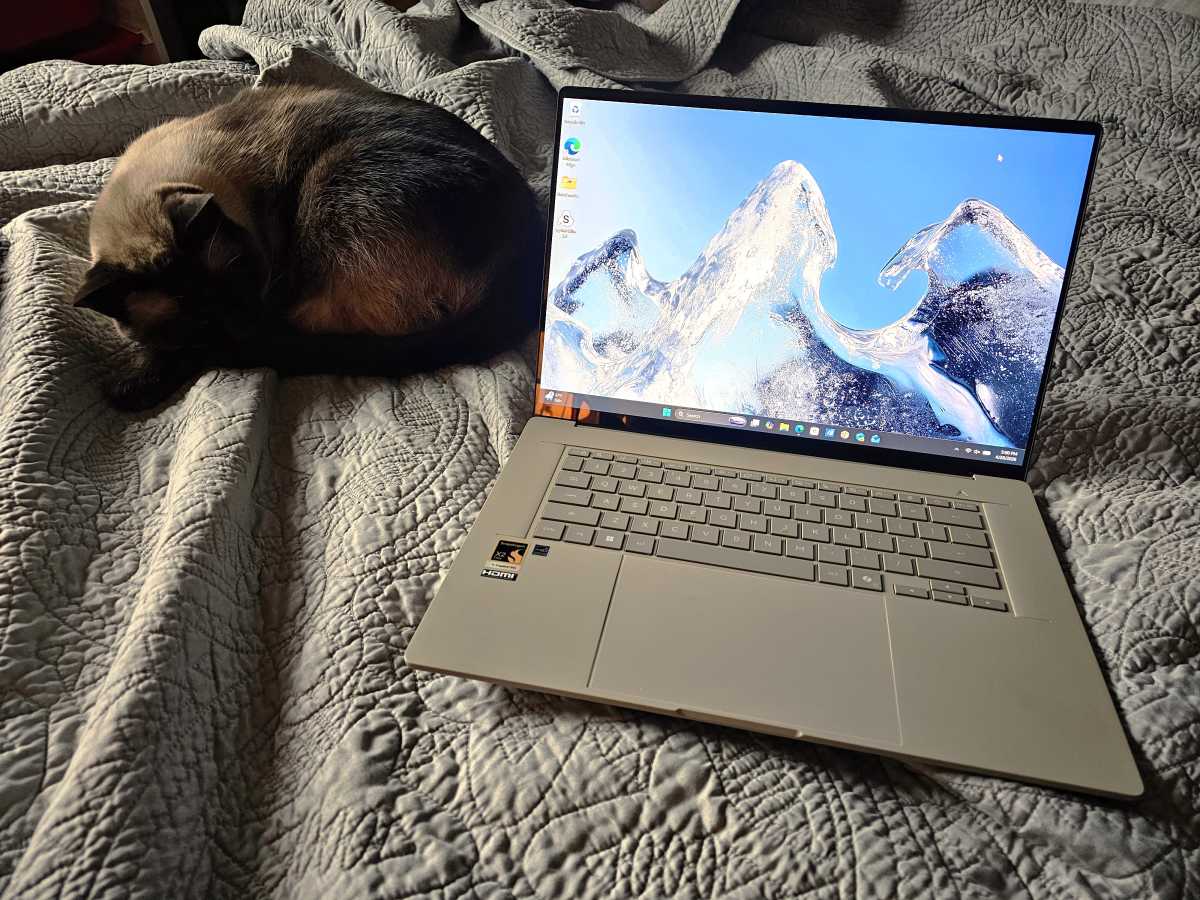
THE HYPE "Qualcomm marketed the Snapdragon X2 Elite and X2 Elite Extreme as delivering 'multi-day battery life' for Copilot+ laptops, with OEM partners advertising local video-playback figures as high as 45 hours (HP OmniBook 3 16) and Qualcomm citing up to 43% better power efficiency at the same performance versus the prior generation."
THE REALITY PCWorld's real-world streaming battery test found the Asus Zenbook A16 with the Snapdragon X2 Elite Extreme lasted just 13 hours 4 minutes on Netflix playback, calling the result 'near the bottom of the heap' among the laptops it tested that cycle and worse than several Intel- and AMD-powered competitors, including an Intel Panther Lake laptop that hit 16.5 hours. The same reviewer went further, writing they would 'still recommend a first-generation Snapdragon X Elite laptop' over the new X2 Elite for anyone chasing maximum efficiency, meaning the sequel chip's real-world battery life regressed relative to its own predecessor in that test despite the marketing push. Independent analysis site multicoreperformance.com found the marketing figures technically real but achieved only under lab conditions OEMs disclosed as 'Wi-Fi off, minimum brightness, no background tasks,' with realistic mixed-use battery life landing around 12-15 hours -- still solid, but roughly a third of the headline 45-hour claim.

THE HYPE "Intel positioned Panther Lake (Core Ultra Series 3), its first chip built on the in-house 18A process, as combining Arrow Lake-class compute power with Lunar Lake-class efficiency -- claiming up to 50% more performance at similar power versus Lunar Lake, up to 27 hours of battery life, and integrated Xe3 graphics strong enough to deliver gaming performance that traditionally required a discrete GPU."
THE REALITY PCWorld's hands-on review of the Core Ultra X9 388H (Panther Lake's top SKU) largely validated the efficiency pitch, measuring roughly 22-28 hours of battery life on an Asus ZenBook Duo prototype depending on configuration, though 'just under 14 hours' in a heavier office-work simulation -- confirming Intel's headline number is achievable but config-dependent, not a floor. On graphics, the review found native rasterized performance (24 fps in Metro Exodus at 1080p Highest, 35 fps at max Windows settings) still fell short of a discrete RTX 4050 laptop GPU without help; the 'replaces the need for discrete graphics' framing only held up once Intel's XeSS 3 frame-generation was switched on, which took Cyberpunk 2077 from 52 fps to 92 fps at 1080p Ultra -- a real, independently measured jump, but one that depends on interpolated frames rather than native rendering power.

THE HYPE "Intel marketed the Core i9-13900K and 14900K as its flagship desktop processors, positioned for stable, reliable high-performance gaming and workstation use at the top of its Raptor Lake lineup."
THE REALITY Beginning in early 2024, widespread real-world reports emerged of these chips crashing, particularly during gaming, with one server-hosting company (Alderon Games) switching entirely to AMD after finding affected processors had a failure rate approaching 100% in their environment. Independent monitoring found Intel CPUs represented roughly 70% of crash error logs compared to 30% for AMD across a large sample. Intel's own investigation confirmed the root cause: a microcode algorithm was requesting excessively high operating voltages, in some cases 1.55V or more, causing permanent degradation in affected chips over time. Intel released three rounds of microcode fixes through 2024, but publicly acknowledged the fix could not repair chips already damaged. A class-action lawsuit filed against Intel alleges the company knew about the instability since late 2022 but did not disclose it or issue a recall, and Intel separately extended the warranty on affected 13th/14th Gen desktop CPUs.
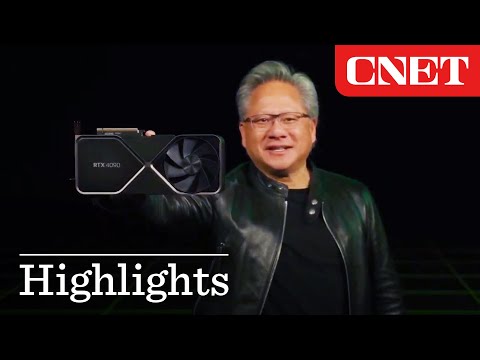
THE HYPE "Nvidia marketed the RTX 4090 as its flagship, top-of-the-line graphics card, sold at $1,599 with a redesigned 12VHPWR power connector intended to be a safe, reliable standard for high-wattage GPUs going forward."
THE REALITY Within weeks of the October 2022 launch, real reports of the 12VHPWR connector melting or burning began appearing, with Nvidia confirming around 50 known cases globally by November 2022 and community-tracked reports continuing well beyond that. A class-action lawsuit alleged Nvidia sold the card with 'a defective and dangerous power cable plug and socket' posing 'a serious electrical and fire hazard.' Independent investigation found the connector required precise, full seating to avoid the failure, with an estimated failure rate around 0.04% -- a small percentage, but on a card sold in large volumes, translating to a real number of actual melted connectors and at least one widely reported case where a pet cat alerted its owner to a smoking, melting connector.

THE HYPE "Nvidia marketed the RTX 5090, unveiled at CES 2025 for $1,999, as its new flagship GPU built to full Blackwell architecture specifications, including a specific advertised count of 176 ROP (render output) units for its top-tier performance."
THE REALITY Nvidia confirmed that a manufacturing defect affected less than 0.5% of RTX 5090/5090D and RTX 5070 Ti units, each missing one ROP unit -- shipping with 168 instead of the specified 176. Nvidia's own data showed this caused an average 4% graphical performance loss, with worst-case scenarios showing FPS drops of up to 10% in certain games -- a real, measurable shortfall from the advertised specification, not merely a cosmetic labeling issue. The defect was later confirmed to also affect some early-production RTX 5080 units. Nvidia said the manufacturing anomaly had been corrected going forward and directed affected customers to their board manufacturer (Zotac, MSI, Gigabyte, Manli, and others) for replacement.

THE HYPE "ASUS marketed the ROG Ally, revealed at Computex 2023, with a standard manufacturer warranty covering defects, backed by ASUS's reputation as a major, trusted PC hardware brand with established customer support."
THE REALITY When independent outlet Gamers Nexus sent in a ROG Ally with a defective thumbstick -- a widely reported common issue with the handheld -- for warranty repair, ASUS's repair center demanded nearly $200 to address several minor cosmetic issues found during inspection and refused to reassemble the device unless the fee was paid. A separate customer reported being quoted $3,728 CAD to repair a tiny dent in an RTX 4090 graphics card that cost $2,799 CAD new. After Gamers Nexus published its investigation and the story drew wide attention, ASUS acknowledged the pattern, issued a public apology, and committed to a full overhaul of its US warranty service, including creating a dedicated inbox to re-process disputed prior cases -- ultimately settling over 120 historic cases and proactively reaching out to more than 300 customers who had been incorrectly overcharged.

THE HYPE "Samsung marketed the 990 Pro as a premium, reliable PCIe 4.0 NVMe SSD for gamers and high-end PC builders, with accurate health monitoring via its own Samsung Magician software."
THE REALITY Starting in early 2023, users widely reported the drive's launch firmware (version 0B2QJXD7) causing an erroneous accelerated health decline with no actual relationship to real NAND wear -- some drives showed health dropping more than 10% within days or weeks of normal use. Samsung confirmed the issue was a genuine firmware bug and released a fix (version 1B2QJXD7) in February 2023, but explicitly stated the update could only stop further false degradation, not reverse or correct health figures already reported incorrectly. Drives that had already reported themselves as heavily worn could go read-only, refuse writes, or fail to initialize -- even though the underlying NAND still had real write life remaining. Some owners initially reported Samsung refusing warranty returns before the company acknowledged the scale of the problem and began replacing affected drives.

THE HYPE "Apple marketed the redesigned M4 Mac mini, starting at $599, as its best-value Mac yet -- a genuinely powerful, compact desktop machine at a price point meant to be a compelling, affordable entry into the Apple Silicon ecosystem."
THE REALITY Independent reviewers extensively corroborated this specific value claim. TechRadar directly stated the M4 Mac mini offers 'more value at $600, let alone at $500, than similarly priced Windows mini PCs' and separately crowned it 'the best Mac ever.' Reviewers praised the redesigned, genuinely compact 5-by-5-inch form factor, its fully passive (silent) cooling at the base configuration, and real-world performance gains from the M4 chip -- while also noting a real, honest caveat: the base model's memory and storage upgrade pricing remains steep, a genuine drawback reviewers flagged rather than glossed over.

THE HYPE "Apple marketed the M5 Pro and M5 Max MacBook Pro as a major performance-core upgrade, with faster sustained performance for professional workloads and local AI tasks."
THE REALITY The launch was one of the most-discussed Apple hardware stories of the year on Hacker News (862 points, 976 comments), with Ars Technica's independent hands-on testing of the performance cores backing up real-world gains. The claims around local AI capability also held up in practice: independent developers have posted real, verified demos running large local LLMs (including a 35B-parameter model) directly on M5 Pro hardware with good throughput, and one project used an M5 Pro machine as the base for a working local AI security system.

THE HYPE "Microsoft and ASUS marketed the ROG Xbox Ally as a purpose-built Xbox handheld gaming PC, with the custom Windows-based "Xbox full-screen experience" positioned as the optimized way to play on the device."
THE REALITY Tom's Hardware ran independent benchmark testing comparing the device's stock Windows/Xbox experience against a Linux install, and found Linux delivered up to 32% higher frame rates, more stable frame times, and quicker sleep/resume — directly contradicting the idea that the Windows-based Xbox experience is the optimized way to run this hardware. This was one of the more-discussed hardware stories in its category (155 points, 200 comments on Hacker News).
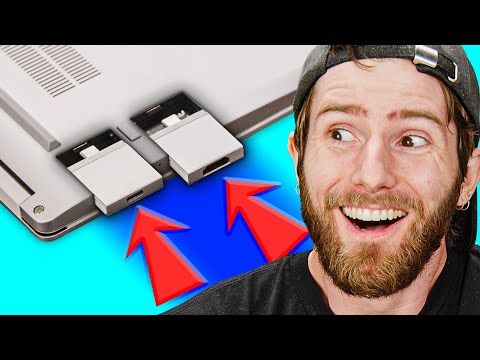
THE HYPE "Framework pitches its laptop as fully modular and repairable — swap the ports, RAM, storage, even the mainboard yourself, instead of the sealed-in-place design of most modern laptops."
THE REALITY Its original announcement reached 2,563 points and 991 comments on Hacker News — one of the largest laptop-launch receptions checked by this site. A second real milestone, its actual shipping announcement, reached 1,502 points and 762 comments — meaning real engagement held up between announcement and delivery, not just a one-time launch spike.

THE HYPE "Valve pitches the Steam Deck as a portable PC that plays your existing Steam library — full PC gaming, not a locked-down console, in a handheld form factor."
THE REALITY Its Hacker News launch thread reached 2,517 points and 1,609 comments — one of the largest hardware-launch receptions on HN of any product checked so far by this site. A separate 2025-era story about Meta adopting the Linux CPU scheduler Valve built for Steam Deck (701 points, 392 comments) shows the engineering work behind it kept generating real technical discussion years after launch, not just at release.