Outliers: The Story of Success
DROP ITby Malcolm Gladwell
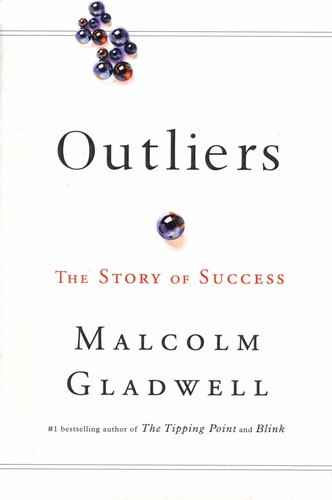
Last verified September 13, 2026
💬 — ask a question or share feedback →Anders Ericsson, the researcher behind the original study Gladwell's '10,000-hour rule' is based on, has directly stated the figure was an average with wide individual variation, not a universal threshold, and that his research specifically concerned structured 'deliberate practice' rather than general practice time.
Outliers popularized the '10,000-hour rule': that roughly 10,000 hours of practice is the key threshold separating world-class experts from everyone else, presented as a research-backed formula for achieving mastery in any field.
Anders Ericsson, the psychologist whose 1993 study of Berlin violin students is the actual source of the '10,000 hours' figure, has directly and publicly disputed Gladwell's framing. Ericsson's original research found that the most accomplished violin students had, on average, accumulated around ten thousand hours of practice by age twenty -- an average, not a universal threshold. In the actual study, roughly half of the top-tier violinists had not reached ten thousand hours, while some individuals logged more than 25,000. Ericsson has also emphasized that his research specifically concerned 'deliberate practice' -- a structured, effortful form of training -- which Gladwell's book did not clearly distinguish from practice in general.
This is about as direct a claim check as it gets: the researcher whose own study is cited as the source disputes the popularized version of his own finding. An average across a small sample, with meaningful individual variation on both sides, became a universal rule in the retelling -- and the specific, structured nature of the practice involved got flattened into just 'practice.' That's a real, acknowledged distortion of the underlying research, not a matter of interpretation.
- Salon — Anders Ericsson, author of the original 1993 study Gladwell cites, states the 10,000-hour figure was an average with substantial individual variation, not a universal threshold, and that the research specifically concerned structured 'deliberate practice' rather than practice in general.
The 10,000 hour Rule (Malcolm Gladwell) — Visual Knowledge
Is the 10,000-hour rule from Outliers scientifically accurate?
Not as popularized. Anders Ericsson, whose 1993 study is the source of the figure, has said it was an average with roughly half the studied violinists below that threshold and some well above it, not a universal rule.
What did Gladwell leave out of the original research?
Ericsson's research specifically concerned 'deliberate practice' — a structured, effortful training method — a distinction Gladwell's book did not clearly maintain from practice time in general.